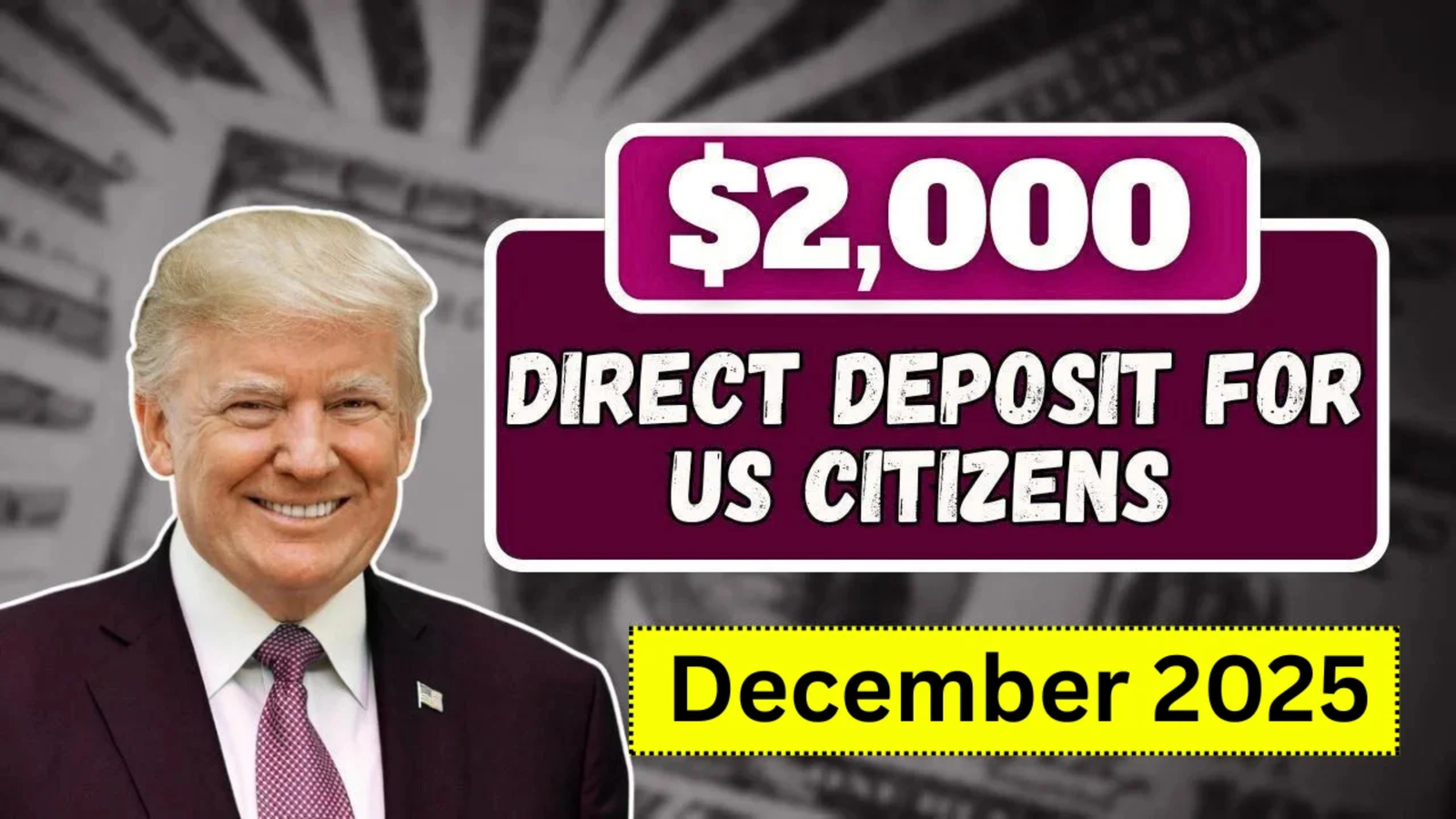
$2,000 December 2025 Direct Deposit: Hoping for a $2,000 surprise in your bank account this December? The idea has exploded online, fueled by President Donald Trump’s talk of a “tariff dividend”—a cash rebate from extra fees on imported goods like electronics or toys from abroad.
This proposal would share government earnings with everyday Americans to help with holiday bills or rising costs, much like the stimulus checks during the COVID-19 shutdowns. But is it real for December 2025? In this complete guide, we’ll break it down in easy terms: the latest status, who might qualify if it happens, payment timelines, and straightforward IRS (Internal Revenue Service, the tax agency) guidelines for U.S. citizens. We’ll use fresh facts from reliable sources to clear up the confusion and help you plan without falling for scams.
As of December 8, 2025, the IRS and Treasury Department confirm no $2,000 direct deposits are approved or coming this month. Trump’s idea is still just talk—no law from Congress means no checks. Rumors often mix it with old 2021 stimulus claims (deadline passed April 15, 2025). Always verify on IRS.gov to avoid fakes.
What Is the $2,000 Direct Deposit Proposal?
The $2,000 isn’t a new emergency handout but a “dividend” from tariffs—taxes on foreign imports that have pulled in about $195 billion by September 2025. Trump first mentioned it in July 2025, then ramped up in a November 9 Truth Social post: “A dividend of at least $2000 a person (not including high income people!) will be paid to everyone.” He says tariffs boost U.S. jobs and factories, and the cash would reward middle-class families while cutting the $37 trillion national debt.
Why No Confirmation for December 2025?
Tariffs protect American workers by making foreign products costlier, but they often raise prices for buyers—up to $2,600 extra per family yearly. Trump’s rebate would give that back. White House press secretary Karoline Leavitt said on November 12 he’s “committed.” But Treasury Secretary Scott Bessent told ABC News no details discussed with Trump—it might turn into tax cuts, like no tax on tips, instead of checks. Congress must pass a bill, like Sen. Josh Hawley’s American Worker Rebate Act ($600–$2,400 per family), but it’s stalled. Fact-checkers from FactCheck.org say no December action—unsupported speculation. Trump confirmed no holiday payouts: “No, no” for 2025. The Supreme Court may review tariff powers soon, potentially halting funds.
Who Qualifies for the Potential $2,000 Payment?
No final rules since it’s not law, but Trump’s words target “middle and lower income” folks—not the rich—to ease tariff-driven price hikes. It’d likely copy COVID stimulus: Help for working families.
- Income Caps: Full $2,000 for singles under $75,000 or couples under $150,000 adjusted gross income (AGI—earnings after deductions). It drops off above $80,000 single/$160,000 couple, zero at $100,000+.
- Basic Requirements: U.S. citizens or legal residents with a Social Security Number (SSN) or Individual Taxpayer Identification Number (ITIN). Age 18+; kids under 18 via parents.
- Family Add-Ons: $500–$600 extra per child or dependent, up to $2,400 for a family of four in Hawley’s bill.
- Special Groups: About 123–150 million under $100,000 could qualify, including SSI (extra aid for low-income disabled/seniors) or veterans if income fits. Non-filers? File taxes to join.
A Rasmussen poll shows 62% support, but it’s waning.
How to Prep for Eligibility
If it passes:
- Review your 2024 tax return for AGI proof.
- Log into IRS.gov with your SSN to update info.
- Note family members for add-ons.
- File 2025 taxes early (due April 2026) to stay in line.
Exact Payment Dates: What We Know So Far
No firm dates—it’s not approved. Rumors of December 31, 2025, are fake. Trump suggested 2026 rollout, possibly spring. Past IRS payments took weeks: direct deposits in days, checks in 1–2 weeks after approval.
| Payment Option | Expected Timeline (If Approved) | Benefits | Drawbacks |
|---|---|---|---|
| Direct Deposit | 1–3 business days post-approval | Quick, no mail hassle | Requires valid bank info |
| Paper Check | 7–14 days | No bank account needed | Risk of loss or delay |
| Prepaid Debit Card | 5–10 days | Easy access, no fees if used right | Possible expiration dates |
This setup, from prior rounds, keeps things efficient.
Simple IRS Rules for U.S. Citizens
The IRS favors direct deposits—they’re fast, secure, and save paper. Here’s what to know in easy terms:
- How It Works: Money goes straight to your bank—no waiting for mail.
- Set It Up: Use your tax return to add bank details, or update on IRS.gov.
- Safety: It’s protected, but watch for scams—the IRS never asks for money to get your payment.
- Taxes on It?: This relief would likely be tax-free, like past stimulus, but confirm with a tax expert.
The IRS is moving away from paper checks, so direct deposit is the best bet for speed.
FAQs on the $2,000 Direct Deposit
Q: Is the $2,000 payment real for December? A: No—it’s a proposal, not approved. No December payouts.
Q: How do I apply? A: No application yet. If approved, the IRS would handle it automatically based on taxes.
Q: What if I don’t have a bank account? A: You might get a check or debit card, but direct deposit is encouraged for faster access.
Q: Will seniors or SSI recipients get it? A: Possibly, if they meet income rules. But nothing confirmed.
Q: Where can I get updates? A: Check IRS.gov or Treasury.gov. Avoid untrusted sites.
Conclusion
The $2,000 direct deposit for December 2025 sounds like a holiday gift, but it’s not confirmed—it’s part of Trump’s tariff dividend idea to support Americans with extra government money from import fees. While eligibility might focus on lower-income U.S. citizens under $75,000, payment dates are unknown, and IRS rules favor direct deposits for ease.
Stay smart and don’t fall for scams promising quick cash. Watch official sources for real news. If this plan passes, it could ease financial stress—like past stimulus did—but for now, plan your budget without it. This guide aims to cut the confusion and give you the facts in simple words.