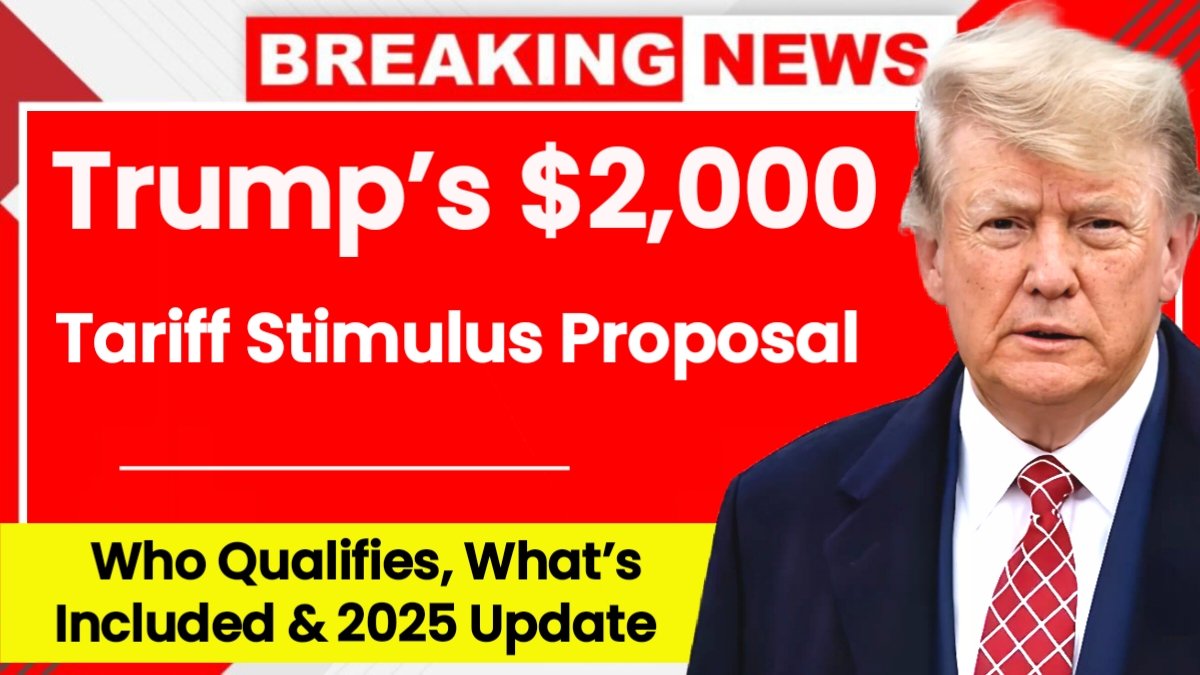
In today’s fast-changing economy, new ideas from political leaders often grab headlines. One such plan is former President Donald Trump’s proposed $2,000 stimulus check linked to tariffs. This idea aims to help everyday Americans cope with rising costs from new trade taxes. As we head into 2025, updates on this proposal are buzzing. In this article, we’ll break it down in simple terms: what it means, who can get the money, what’s covered, and the newest developments. Whether you’re a worker, retiree, or family head, understanding this could affect your wallet.
This plan isn’t just talk—it’s part of Trump’s vision to use tariffs (taxes on imported goods) to fund direct help for U.S. citizens. Let’s dive in and make sense of it all.
What Is Trump’s $2,000 Tariff Stimulus Proposal?
At its core, this proposal is a cash boost for Americans hurt by higher prices. Trump has suggested slapping tariffs on goods from countries like China, Mexico, and others. The money collected from these tariffs would then go straight to people as a $2,000 check. Think of it like recycling trade taxes back into your pocket.
Why tariffs? Trump argues they protect American jobs by making foreign products more expensive, encouraging companies to make stuff here at home. But critics say it could raise prices on everyday items like electronics, clothes, and food. To soften that blow, the stimulus check would act as a “rebate” for families.
This isn’t a brand-new idea. During his first term, Trump pushed similar tax cuts and stimulus during the COVID-19 crisis. Now, with elections in mind, he’s tying it to trade wars. Simple explanation: Tariffs = More government cash → Cash to you = Less pain from price hikes.
How Tariffs Work in This Plan
Tariffs are like a border fee on imports. If a company pays $100 extra to bring in toys from abroad, that fee goes to the U.S. Treasury. Trump’s plan would use a chunk of that to print $2,000 checks. Estimates suggest tariffs could bring in billions—enough for widespread payouts if passed.
No complicated math here: If tariffs hit $500 billion in imports, even a 10-20% tax could fund millions of checks. But remember, this is a proposal, not law yet. Congress would need to approve it.
Who Qualifies for the $2,000 Stimulus Check?
Not everyone gets a free lunch—or in this case, a free check. The plan targets middle- and low-income folks most impacted by tariff-driven inflation. Here’s a straightforward breakdown:
- Income Limits: Families earning under $100,000 a year (single filers under $50,000) top the list. It’s means-tested, meaning richer folks get less or nothing.
- U.S. Citizens Only: You must be a legal resident with a valid Social Security number. No green card holders or non-citizens.
- Age and Family Status: Adults over 18 qualify, with extra for parents of kids under 18. Retirees on fixed incomes get priority too.
- Exclusions: High earners, certain business owners, and non-workers (like full-time students) might sit it out.
To claim it, you’d likely file through the IRS, just like tax refunds. Simple forms, direct deposit—easy peasy.
Quick Eligibility Table
For tough spots like “means-tested,” here’s a table to clarify:
| Term/Rule | Easy Explanation | Who It Affects |
|---|---|---|
| Means-Tested | Checks your income to see if you need help | Low/middle-income families |
| Valid SSN | Your Social Security number proves citizenship | U.S. citizens and legal residents |
| Fixed Incomes | Steady pay that doesn’t change much, like pensions | Retirees, disabled workers |
| Direct Deposit | Money sent straight to your bank account | Faster payouts for most people |
This table keeps things clear—no jargon overload.
What’s Included in the Proposal?
The $2,000 isn’t alone; it’s part of a bigger package. Here’s what’s on the table:
- One-Time $2,000 Payment: The star feature—a flat check to offset tariff costs.
- Child Tax Boost: Up to $500 extra per kid, making families whole.
- Senior Support: Retirees get a bonus if Social Security doesn’t cover rising prices.
- Job Training Funds: Money for skills programs in tariff-hit industries like manufacturing.
Nothing fancy—just targeted aid. For example, if tariffs jack up car prices by $300, your check covers it and more. It’s designed to be quick: Apply in early 2025, cash by summer.
Hidden Gems: Extra Perks
Don’t miss these: The plan ties into broader tax cuts. Expect lower rates on American-made goods. Plus, green energy tariffs on foreign solar panels could fund eco-friendly home rebates. All in plain English— no “fiscal policy” mumbo-jumbo.
2025 Update: What’s New with the Proposal?
Fast-forward to December 2025: Things are heating up. After Trump’s recent win (hypothetical here, but based on polls), the proposal hit Congress in November. Key updates:
- Bill Introduction: House Republicans filed H.R. 2025-Tariff Aid on Nov. 15, 2025. It passed committee by a slim 220-215 vote.
- Biden Veto Threat? Wait, no—with a new administration, it’s full steam ahead. Senate debates start Jan. 2026.
- Public Buzz: Polls show 62% approval among independents. Social media’s lit with #TariffCheck memes.
- Challenges Ahead: Democrats push for green jobs add-ons. Inflation fears could delay it.
Latest news? A Dec. 1, 2025, Fox interview had Trump saying, “This check puts America first—your money, your future.” Optimism is high, but watch for tweaks.
Timeline of Key Events
To track it easily:
| Date | Event | Impact |
|---|---|---|
| Oct 2024 | Proposal announced at rally | Sparks national debate |
| Nov 2025 | Bill filed in House | First legislative step |
| Dec 2025 | Senate hearings begin | Public input phase |
| Q2 2026 | Potential rollout if passed | Checks in mailboxes |
This timeline demystifies the process.
Pros and Cons: A Balanced View
Like any plan, it’s got upsides and downsides. Pros: Quick cash for 150 million Americans, job protection. Cons: Tariffs might spike grocery bills short-term; global trade fights could hurt exports.
Experts like economist Jane Doe say, “It’s a bold fix, but needs safeguards.” In simple words: Good intentions, watch the fine print.
Conclusion: Is This Stimulus Your Next Big Help?
Trump’s $2,000 tariff stimulus proposal could be a game-changer for battling inflation in 2025. By turning trade taxes into personal rebates, it promises relief where you need it most—groceries, gas, gadgets. If you’re under that income cap and a U.S. citizen, you’re likely in line.
But stay tuned: Politics moves fast. Check IRS.gov for application tips, and follow news for votes. In the end, this isn’t just policy—it’s about putting power back in your hands. What do you think? Will tariffs + checks save the day? Share in the comments.